Search This Blog

Pookie Background

Wednesday, March 6, 2013

Trisomy Tea - Raising Awareness One Cup at a Time

Trisomy Tea

A very special friend, Cindy Chamberlin, is running a very simple fundraiser that I would encourage everyone to consider joining, and it will only cost you $5!  Here is her message:
Well I can’t WAIT any more! March is Trisomy Awareness Month. In honor of our daughter, Jordan Elizabeth Chamberlin, I will be having a fund raiser to support Hope for Trisomy, Now I Lay Me Down to Sleep, and our local families that have experienced a loss by selling “Tea Cups”.
Each Tea Cup is $5.00 (see picture below) and includes a special bag of tea. They can be mailed within the US for an additional 46 cents (and of course can be picked up/dropped off locally). Message me if you live out of the US and we can work something out!!!!
Because Jordan had Trisomy 18; $3.18 of each cup sold will go to Hope for Trisomy, $1.00 to NILMDTS, and the rest to stay locally in the hopes of having a larger ceremony on October 15 (National Pregnancy and Infant Loss Day). I can accept cash, check, and paypal. Let me know if you have any questions. My goal is to sell at least 200! I’m so excited to raise awareness and continue to celebrate what Jordan means to us!!! Thank you for your help and support!
Each Tea Cup is $5.00 (see picture below) and includes a special bag of tea. They can be mailed within the US for an additional 46 cents (and of course can be picked up/dropped off locally). Message me if you live out of the US and we can work something out!!!!Because Jordan had Trisomy 18; $3.18 of each cup sold will go to Hope for Trisomy, $1.00 to NILMDTS, and the rest to stay locally in the hopes of having a larger ceremony on October 15 (National Pregnancy and Infant Loss Day). I can accept cash, check, and paypal. Let me know if you have any questions. My goal is to sell at least 200! I’m so excited to raise awareness and continue to celebrate what Jordan means to us!!! Thank you for your help and support!
This is what the Trisomy Tea awareness "tea cup" looks like. To order a tea cup, please send a donation (or order request to receive a pre-order invoice) of $5.46 for each cup to the following paypal account: cynster@suddenlink.net. Provide your total tea cup order and your mailing address. $3.18 goes to Hope for Trisomy, $1 to NILMDTS, $.82 to a local WV effort for National Pregnancy and Infant Loss Day on 10/15, and $.46 for shipping costs.  Thank you for your support! 
This is Jordan's Gemma's Bear from Hope for Trisomy. Your donation to Trisomy Tea helps us fund Hope for Trisomy's Gemma and Payton bear gifts to families facing a trisomy diagnosis or a milestone birthday. We receive heart-warming comments from families that receive our bears. For more information about the bear programs, please see hopefortrisomy.org.
Cindy and her beautiful Jordan.

Getting Down With Chromosomes


Day 4 Share

On our 4th day of MARCHING into TRISOMY AWARENESS MONTH, we are going to share an interesting FACT about chromosomes. We all have learned that Trisomy is a chromosome disorder, but does everyone know what a chromosome is? A chromosome is a threadlike strand of DNA in the cell nucleus that carries the genes in a linear order. Each chromosome carries genes that contain the hereditary material that controls the growth and characteristics of the body. There are 46 chromosomes in each human cell organized in 23 pairs, of which 22 pairs are similar in appearance but differ at the molecular level. Here is the interesting fact; the chromosomes are designated by a number beginning with chromosome 1 being the longest, followed by chromosome 2, etc. So as the numbers get higher, the chromosome gets smaller as you can see in the sample picture. Share because you Care. ♥

Day 5 Share

On our 5th day of MARCHING into TRISOMY AWARENESS MONTH, we are going to share a little more about chromosomes. Did you know that a chromosome has ARMS? Well...it does. All human chromosomes have 2 arms -- a short arm and a long arm -- that are separated from each other only by the centromere, the point at which the chromosome is attached to the spindle during cell division. The short arm is termed the "p arm" while the long arm of the chromosome is termed the "q arm." The symbol "p" was chosen to designate the short arm because "p" stands for "petit", "small" in French. The letter "q" was selected to signify the long arm merely because "q" is the next letter in the alphabet. Share because you Care. ♥

Sunday, March 3, 2013

Trisomy Awareness - SHARE because you CARE!


The following tidbits of information for Trisomy Awareness month are brought to you by a passionate trisomy mom and friend, Alisha, who is part of the Hope for Trisomy organization. Visit our Facebook page to keep up with a month of facts, fun and inspiration!
This is Alisha with her full trisomy 18 son, Lane, who is 4 years old.
3/1/13: Today is the beginning of a very special month for us! Why you ask? It's the 3rd month of the year and so we celebrate MARCH as TRISOMY AWARENESS MONTH...with "tri" defined as, in intervals of 3. We will be bringing awareness to TRISOMY because awareness is the first step to education, and we will be educating by starting with the basics. When a child is born with a 3rd copy of a chromosome, then they have been born with a TRISOMY syndrome. When we are born, we all receive 23 chromosomes from each of our parents totaling 46 chromosomes. Your father's DNA decides what sex you will be on the 23rd chromosome he has given you. A TRISOMY syndrome can be made on any of the 23 chromosomes present in the body, which will then make the genetic makeup total 47 chromosomes. ♥  (I posted Day 1 on my last post, but I didn't want it to get lost. ;-)

3/2/13: On our 2nd day of MARCHING into TRISOMY AWARENESS MONTH, we are going to learn who is more likely to become pregnant with a child diagnosed with Trisomy. Can you guess? Well...the answer is, any female who can become pregnant! Trisomy DOES NOT discriminate! Trisomy doesn't care what age you are (although there is a higher risk in women older than 40), what ethnic group, what demographic location, or how much money you make! Trisomy can happen to you, a family member, or a friend! Please help us in bringing awareness to the WORLD. SHARE because you CARE. ♥

3/3/13: On our 3rd day of MARCHING into TRISOMY AWARENESS MONTH, we are going to share the 3 different types of TRISOMY. The 3 different types being FULL, MOSAIC, and PARTIAL. The most common type is FULL Trisomy, and this means the extra chromosome occurs in every cell of the body. This type of Trisomy is not hereditary. MOSAIC Trisomy occurs when the extra chromosome is present in some (but not all) of the cells of the body. Like Full Trisomy, Mosaic Trisomy is not inherited and is a random occurrence that takes place during cell division. PARTIAL Trisomy occurs when only "part" of an extra chromosome is present. Some Partial Trisomy syndromes may be caused by hereditary factors. It is important to note...while there are different types of Trisomy, this does not mean one is better for a child than another. With each type, there is a wide spectrum of severity. It is hard to say how the extra chromosome will impact an individual child from the genetic diagnosis alone. Share because you Care. ♥

Check out these Inspirational Trisomy Kids Stories brought to you by Hope for Trisomy.


Friday, March 1, 2013

Trisomy Awareness Shares

Let's make this month a successful one for raising Trisomy Awareness! Here are some photos to share and some information to pass along about trisomy.  Sharing a tidbit of information about trisomy from Hope for Trisomy's facebook page. Visit daily this month for more information about trisomy!
Today is the beginning of a very special month for us! Why you ask? It's the 3rd month of the year and so we celebrate MARCH as TRISOMY AWARENESS MONTH...with "tri" defined as, in intervals of 3. We will be bringing awareness to TRISOMY because awareness is the first step to education, and we will be educating by starting with the basics. When a child is born with a 3rd copy of a chromosome, then they have been born with a TRISOMY syndrome. When we are born, we all receive 23 chromosomes from each of our parents totaling 46 chromosomes. Your father's DNA decides what sex you will be on the 23rd chromosome he has given you. A TRISOMY syndrome can be made on any of the 23 chromosomes present in the body, which will then make the genetic makeup total 47 chromosomes. ♥
This is a facebook-sized banner made by a friend of mine who lost her T18 daughter. The footprints are her much-loved and much-missed Ellie Cushman. If you cannot resize this for facebook, pull the photo off of Rebekah's facebook banner: http://www.facebook.com/rebekah.budd

Boy version of the banner.
Facebook Trisomy Awareness profile pic for girls
Facebook Trisomy Awareness profile pic for boys

Please feel free to share Rebekah's photo, story, and information below in support of Trisomy Awareness month!
March is Trisomy Awareness Month. Trisomy is a genetic condition in which there is an extra chromosome in every cell. Down syndrome is trisomy 21. Many rare trisomies are deemed "incompatible" such as Rebekah's Trisomy 18. However, she is showing that she is, indeed, compatible with life. Many trisomy children are aborted or denied life-saving medical interventions. Even with Down Syndrome the abortion rate is >90%. We want people to know that these children are loved and deserve a chance, because every life has value!

Rebekah's Blog: http://buddzoo.blogspot.com/
Rebekah's Facebook Page: http://www.facebook.com/rebekah.budd
Hope for Trisomy: http://www.hopefortrisomy.org/
HFT on Facebook: https://www.facebook.com/HopeForTrisomy13and18

Do you have a trisomy story to share? Post it to Hope for Trisomy and we will add it to our facebook Tri-kids and blog!

Rebekah's Blog: http://buddzoo.blogspot.com/Rebekah's Facebook Page: http://www.facebook.com/rebekah.buddHope for Trisomy: http://www.hopefortrisomy.org/HFT on Facebook: https://www.facebook.com/HopeForTrisomy13and18
Do you have a trisomy story to share? Post it to Hope for Trisomy and we will add it to our facebook Tri-kids and blog!
Feel free to replace you facebook photo with this one in honor of Trisomy Awareness Month!
Let the world know that what the medical community calls "incompatible" and "futile" is met with a different definition by those who love and care for their trisomy miracles.  Please feel free to share!  A larger version is available at Hope for Trisomy's facebook page photos, along with word art for Conventional Thinking and Balanced Approach.
The following 4 posters were designed and offered freely by Eva's Gifts. You can visit her page to order them already made or to download a higher res copy. There is one for Joy, Life, Love and Hope - all featuring different trisomy children and one word their family chose to describe each one. Truly a beautiful project! If you visit her page, there is also a link to a picbadge awareness ribbon and some other banners.


Trisomy Awareness Month - Covert Medical Futility Policies

March is Trisomy Awareness Month. Because many of the rare trisomies are still considered "incompatible" and "futile" despite the growing number of "survivors", I wanted to kick off the month by highlighting a family who has helped raise awareness of covert medical futility policies. These policies exist in most hospitals and few states have laws that require disclosure. They result in passive euthanasia that is accepted by the medical community. It is not acceptable or reasonable to the grieving parents who have lost children due to these policies.

Back in April of 2012, I posted about the Kelletts' journey with their much loved and missed son, Peter.   Peter had full trisomy 18 and was doing well despite the condition. But the Kellett's 6 year old son died after an appendectomy.  An independent autopsy proved that the hospital's "cause of death" was not true and his death could most likely have been prevented. Or was it... encouraged / induced / precipitated?  He was most likely subjected to covert medical futility policies that put the power and decision-making solely into the doctor's hands as they allowed him to die by internal bleeding even when the family voiced their concerns about this possibility. Their journey led Mary Kellett on a mission to have medical futility policies disclosed.

In addition to Mary's efforts to change MN laws and make futility policies public knowledge, their story is now being publicized. There are efforts going on in other states as well to make it illegal for hospitals to withhold information about their Medical Futility Policies from families.

  • Peter Kellett and Trisomy 18: Part I - excerpt from the article
    "The doctor said infection from appendicitis had strained Peter's heart to cause death. But the Kelletts weren't believing him. They ordered an independent autopsy, which found no infection. Peter had internally bled to death."
  • Peter Kellett and Trisomy 18: Part II - excerpt from the article
    "She said, "All throughout Peter's life, from the beginning, the only help it seemed we got (from the medical profession) was to help him die. There was a huge difference between the way doctors treated Peter and the way they treated our other kids. It was like they couldn't see the value of his life. The doctor (at his birth) said Peter would never contribute to society. My argument has been that people with disabilities contribute to society in the most important way. They help us become better people. I call them 'teachers of our souls.'"If having known that particular hospital had adopted a futility of care policy, Kellett wouldn't have taken Peter there. She said parents had the right to know these policies existed. She said, "I have a feeling what's behind (these futility of care policies) is saving money. There's a lot of passive euthanasia going on, especially involving kids with disabilities. We're still devastated over how Peter died." 

Please become educated and aware of these issues that parents of trisomy children face regularly.  It isNOT okay to make death decisions based solely on a medical or genetic label and these practices need to stop. "Contribution to society" comes in many more forms than just working and paying taxes. Special needs children hold a very special place in this world - they teach us about our humanity, about unconditional love. To quote Mary Kellett, "I call them 'teachers of our souls.'"

Visit the Medical Futility Blog for more information.
Help support Mary Kellett's 501(c)(3) - Prenatal Partners for Life.  They offer support and information to families who choose to carry to term a baby with an adverse prenatal diagnosis and support for raising a special needs child.

Tuesday, February 12, 2013

TRY-SO-MY LIFE... HAS MEANING


Trisomy 18 is a scary thing. Statistics sadly state that 90+% of the babies die before birth. That doesn't even include all of the babies that are aborted, which is probably already >90% of those that know about the trisomy 18 before birth.

There is a Hebrew word, Chai (×—×™). The numerological value to Hebrew letters, the letters Het (×—) and Yud (×™) add up to the number 18. The Hebrew word and symbol Chai (×—×™) mean "life". So 18 = LIFE.

Trisomy 18...
TRI-SO-MY 18...
TRY SO MY LIFE... 

♥ TRY SO MY LIFE... HAS MEANING ♥

God bless all the parents who have given their trisomy 18 child's life meaning. It doesn't need to be counted in minutes, hours, days, or years. Each one is uniquely designed by God for a specific purpose.

Thank you to my new trisomy 18 friend, Tanya Meyer-Herrera, for sharing such a beautiful thought with me today. ♥ Please pray for her unborn trisomy 18 baby girl.

Please Vote For The Lift Assist Amazing Research Project!

Please go here ==> http://fllinnovation.firstlegoleague.org/liftassist <== and VOTE repeatedly from now until March 1st! This vote is a popularity contest, but I guarantee if this were based on utility and possibilities, our team would win! We need lots of votes! Explanation below...
Our son is on a First Lego League (FLL) Robotics team for Langston Charter Middle School. This is LCMS's first year in the competition, and Elijah's team got 2nd place in our regional competition! They go on to state competition on 2/23. 
The FLL competition "Challenge" is based on three equally-weighed parts:
1) the Robot Game
2) the Project
3) the FLL Core Values 
This year's project is based on the 2012 theme "Senior Solutions" - the goal is to improve the quality of life for seniors by helping them continue to be independent, engaged, and connected in their communities.
Below is a description of the Gear Turner's project. 
The Gear Turners have listened to several members of the senior citizen community and decided that physical mobility becomes difficult as people age. To answer this issue, we have constructed the LiftAssist. The LiftAssist is a device that helps elderly people get in and out of chairs. One of the most important advantages in the LiftAssist is that it is portable and lightweight. Consisting of two durable air bladders, the device inflates to comfortably support the person and lower them into the chair by deflating. When the person wants to get out of the chair, they reflate the air bladders to a semi-standing position. Then the senior citizen can comfortably move from the chair to a standing position.

We can't show pictures or give more details because the competition isn't over. But the Lift Assist product that was designed for the year's theme of 'Senior Solutions', and it has applications that far exceed that population! It could be used for anyone who needs help getting out of a chair (after surgery, with a disability, weak muscles, etc). It is extremely portable and easy to use. I could also see it being used for disabled children like our trisomy 18 daughter, Rebekah. The team has submitted it for a temporary patent. If they go further in the competition, we'll probably try for the full patent (but it is lots of $$)! This project far exceeds many of those on the leaderboard and we are woefully behind. But we know this is an amazing product!

Go and VOTE: http://fllinnovation.firstlegoleague.org/liftassist

Have You Hugged a Tubie Today?

It's feeding tube awareness week! Have you hugged a tubie today? I have!
There are many reasons why people have feeding tubes - accidents, illnesses, swallowing disorders, esophagus disorders, muscle tone issues, etc. But, just like a genetic disorder, having a feeding tube does not define who a person is.
Here is Rebekah's feeding tube story:
Rebekah is completely fed by feeding tube. This wasn't always the case. She actually came home from the hospital at 7 days old drinking from a bottle. Although it took a lot of energy and time to feed her those bottles, she gained weight and grew. 

At 6 weeks she got her trach and we got a g-tube at the same time because it was very likely that she would be unable to coordinate her suck/swallow with an open airway, as traches increase the risk for aspiration. She barely passed her swallow study, but we could keep feeding her orally! The only problem was that it took her twice as long to drink a bottle now because of the open airway (no pressure to help you swallow vs having the food/drink go down you windpipe) so feeding became a bigger challenge and was taking too many of her calories. So we supplemented with the g-tube since she had one.

Unfortunately, we went through a rough 3 months as Rebekah apparently had issues with her Mic-Key Balloon button g-tube. She kept popping the balloon due to great pressure in her abdomen and, because the g-tube stoma wasn't yet mature, we had to go to the hospital to get her g-tube changed in those 3 months. She must have popped at least 8 balloons and, the strange thing was, they looked blackened. In fact, someone at the hospital actually turned us into DSS for child abuse for "slicing and burning" her g-tube in "Munchausen by Proxy" fashion to get attention, I guess? Here we are with a child that wasn't supposed to survive, and we kept begging for answers to the g-tube dilemma, and we were being investigated for "child abuse". This happens OFTEN to families with disabled children. I am glad to say that the case was dropped fairly quickly as there was no founded evidence to support the claim and we had a list of doctors that wrote letters to attest to the great care Rebekah was receiving.

I kept pressing the doctors to change her g-tube and found some information saying that this happens in some patients, they cannot tolerate the balloon g-tubes. I also figured out that the dark look on the tubes was due to her Prevacid. Apparently her stomach acid reacts kind of funny with it and it turns really dark in her stomach and does not seem to digest.  But we were ignored. Luckily another pediatric surgeon listened to us and immediately changed us to an AMT non-balloon button g-tube. Although it is more traumatic getting it in and out, and we must do it at the surgeon's office, there was IMMEDIATE relief in Rebekah with the change. She used to keep her head turned to the right all the time and we thought it was 
torticollis. Turns out she was turning away from the pain she was experiencing which seems to be pretty typical in infants. The profile is lower than the Mic-Key and the material is more flexible. So this is better for being on the stomach too!  We also changed from Prevacid to Nexium and, guess what? No more black gunk in her stomach or on the feeding tube!

At 4 months of age, Rebekah was hospitalized for 2 weeks in the PICU with some major upper respiratory issues. We were not allowed to feed her by mouth and I didn't even think about giving her a passy to suck since she was pretty out of it. Well, 4 months is about when the infant suck REFLEX turns into a LEARNED BEHAVIOR. And guess what, we missed the boat. She forgot how to suck!! She started gagging on everything and would aspirate.

We tried many times since then to get her back to some oral feeds but our attempts were not successful. However, I am happy to say that Rebekah, at 45 months old, started sucking her thumb again all by herself! So there is still hope! But we will not push her because the feeding tube has allowed us to focus on other things and not worry about the hours of feeding time it would take per day. We are grateful for her feeding tube!

As a side note, a local friend's child was faced with failure to thrive/grow at one point and they considered getting her a feeding tube. One of their pediatricians actually compared the child to Terri Schiavo (the comatose patient whose family/husband battled over the decision to pull her feeding tube). I am sorry, but a person with a feeding tube is not the same as a person who is in a comatose state, unable to communicate with anyone. Not that I would want to make that decision either, but it is ignorance that leads to statements like that, and parents are then afraid to do something that will HELP their child. I am happy to say that my friend's child managed to thrive without the aid of a feeding tube, but we are very happy with our decision too and it doesn't make our daughter any less deserving of care or consideration. It doesn't make her less of a person!

Feeding Tube Supports:

Tuesday, January 29, 2013

PEAP - Physician Education Awareness Program

Our state has an organization whose mission is to support families with children with special care needs. It is called Family Connections of SC.  While they have many programs, one that I particularly like is their Medical Education Programs:  Medical students and pediatric and family practice residents engage with families in home visits and connections outside the role of physician/patient to better understand family-centered care and the medical home.

Our local upstate chapter of Family Connections works with parents and 3rd year USC med students doing their residencies at Greenville Hospital System to provide PEAP - Physician Education Awareness Program.  I have hosted this twice at my house, and hope to do it many more times in the future! It's a wonderful opportunity to get young doctors in the homes of our "incompatible" children, and show them what they are REALLY like. I also get to explain how seeing a child in the hospital, or even for an office visit, does not give any medical professional an accurate picture of who the child really is and what they can accomplish.
This is from the Jan 2013 PEAP session. These 3 doctors hopefully have a more positive view of trisomy 18 in their careers.
This is Maddie, she as a 2q microdeletion and tag-teamed a PEAP session at my house in March 2012.
Our March 2012 session had a total of 6 med students. Here are four of them.
Here are the other two med students with Rebekah, my son - Jeremiah, and Family Connections' Michelle Johnson who coordinates this program in our area.

I polled my special needs families and trisomy families for input on what they would want to tell doctors and medical professionals about our children. This is what we came up with...

PEAP – Physicians Education Awareness Program
What Do You Do When You Have A Pediatric Patient With Multiple or Life-Threatening Disabilities?

1.  This is a child first and foremost 
  • Use People-First Language (I included some PFL handouts which was already part of what Family Connections gave the Med Students.)
    • People First Language (PFL) represents more respectful, accurate ways of communicating. People with disabilities are not their diagnoses or disabilities; they are people, first. PFL is not about "political correctness," it's about good manners and "the golden rule." 
    • http://www.disabilityisnatural.com/
  • Use the child’s name.
  • Speak of an unborn child as a person, not a thing.
  • Do not make assumptions about the capabilities of a child that you have only spent 5 minutes or less with. Ask to see pictures of the child in his/her home environment. Ask what milestones the child has reached. Ask how the child communicates. Children may be “nonverbal”, but still communicate effectively!
  • Even if managing care for a child that has 10% chance to survive, that child still DOES have a chance. They are not “incompatible”, care is not “futile”.
2.  Be Open To Interventions And Care Options
  • Parents (and doctors) can be realistic AND hopeful at the same time. Being realistic would include surgery recovery times, more aggressive and proactive care, etc.
  • Parents want choices – do not force or assume palliative care or hospice is always in order for a specific child.
  • Tell the WHOLE truth – not just the medical books truth. Give options and realistic expectations. If you don’t know what those are, don’t make assumptions. Be honest about it, or seek out documentation to support your views.
  • Intervention is not always wanted to prolong life. Sometimes intervention is necessary to improve the quality of life a child has – regardless of how long they will be here.
  • Give parents the information they need to make informed decisions. Don’t assert your personal opinion into the mix.
  • SUPPORT A PARENT’S DECISION, whether you agree with it or not. Don’t question why a child is full code.
3.  Each Situation Is Unique
  • Treat the child, not the syndrome. Each child is unique. Two children with the same syndrome will not have the same outcomes and issues. Don’t treat them with cookie-cutter care.
  • Treat the family, not the medical issue. Each family is unique. The care path that one family takes will not be the same as another family facing a similar situation. Adjust your care to the needs of each family and child.
  • Do not speak down to the parents, or treat them like they are idiots. For parents with an unborn child or infant, be compassionate. For parents with older children, they are probably far more aware of their child’s condition than you are.
4. Educate Yourself - Be Willing To Learn
  • What you learned in school does not necessarily reflect “reality”.
  • Listen to the parents – they will no doubt have insight into their child and maybe even the condition if it is something you have not had extensive experience with.
  • Network with families so you can grow beyond book and clinical knowledge to understand how families manage caring for a child with disabilities.
5. Be Compassionate
  • While you may see a child with a hopeless future, the parents see a child they love and cherish – no matter what. Don’t discount that love. A child cannot be replaced (“you can always have another baby”). One child is not more “valuable” than another (“save your time/effort/money for your other children…”).
6. Be Willing To Share
  • Families of children with disabilities need long term care and access to resources. Familiarize yourself with programs and support systems so you can pass that on.
  • Be willing to search and provide medical journal articles and supportive research papers that will help the family cope with their child’s specific issues.
  • Help connect families with similar disorders – peer support is critical!
7. Always Remember That You Are Not Seeing A Child At Their “Best”
  • There is a huge difference between seeing a child critically ill in the hospital, or sick in the doctor’s office, and seeing that same child in their home environment surrounded by comfort, familiarity, and love.
  • There are many children who react differently around “strangers” than they do at home.
8. What Parents Want You To Know
  • I love my child with fill-in-the-blank as much as I love my “normal” children.
  • My child loves me back.
  • My child communicates.
  • My child experiences joy, love, happiness.
  • My child with disabilities is special in many ways. They all have different needs.
  • Ask yourself, “What would I do if (insert name) were MY child?”

MiraLAX Users - Caveat Emptor!

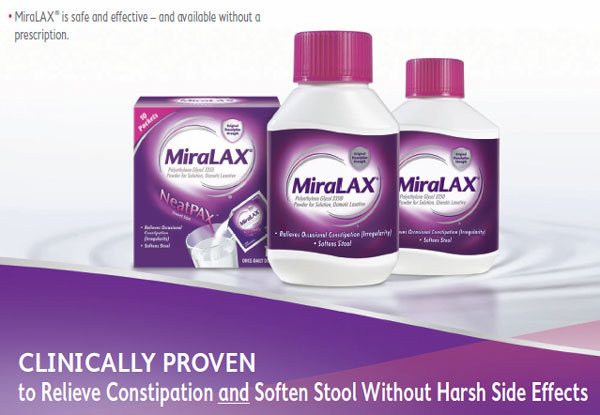
Users of MiraLAX and other generic polyethylene glycol products need to be aware of potential harmful side effects from using this constipation medication!  Generics for MiraLAX include brands such as Clearlax, GlycoLax, Healthylax, Purelax, Dulcolax, and many other products containing polyethylene glycol 3350 (PEG) as an active ingredient.


Many people, especially special needs children, suffer with chronic constipation, reflux, and slow motility issues. Most doctor-prescribed "remedies" are prescription or over-the-counter drugs designed to mask the symptoms and address the problem with a man-made chemical solution.  In our own household, we are guilty of using these remedies time and time again. In fact, for Rebekah, we use a daily regiment of reflux and constipation medications. One popular drug, Nexium, has received a lot of heat for bone depletion issues and I mention this topic in this blog post about the dangers of Nexium and other PPI-type medications.

I was recently made aware of the following link which explains why MiraLAX (and any laxative using Polyethylene Glycol 3350 (PEG for short) as their active ingredient) is not good for you.
http://www.gutsense.org/gutsense/the-role-of-miralax-laxative-in-autism-dementia-alzheimer.html
It is comforting to know that the main ingredient of these laxatives is a chain of ethylene glycol molecules - commonly used in brake fluid and antifreeze. There is evidence showing extremely concerning potential side effects. I try not to be an alarmist, I know there are many websites out there that tell similar stories about many products we use (like corn syrups, artificial sweetners, etc). But it becomes increasingly alarming to think that all of our advancements in chemistry have just led us to create unnatural products that are harming us more than helping.

According to this particular miralax claim, there is supportive evidence that shows that polyethylene glycol (PEG) is associated with neurotoxicity, nephrotoxicity, urticaria, and esophageal perforations. As an osmotic laxative, it blocks absorption of nutrients in the small intestine and leads to dysbiosis (lack of intestinal bacteria). The FDA's Adverse Event Reporting System (AERS) has included reports of serious kidney, rinary, bowel, blood, skin, and neuropsychiatric symptoms.  What I appreciate most (despite this not being a "medical" paper) is the appropriate links to actual medical journal papers that support the claims.

I did my own quick search and here are just a few of the things I found that support the article:

  • WebMD says that common side effects of use are nausea, cramping, and gas (many of the symptoms we are trying to fix in the first place!), and that caution should be used if you have certain stomach & intestinal problems / obstructions (isn't constipation a form of obstruction and chronic constipation a stomach/intestinal issue?) or irritable bowel syndrome.
  • The New York Times posted an article last year that states that there is no warning about use of MiraLAX with children despite lack of studies. Even more troublesome is that pediatricians are prescribing MiraLAX for long-term use despite the warning labels not to use it more than 7 days (my generic brand says 14 days).
  • Even ehow.com states that long term use of MiraLAX can lead to diarrhea, dehydration, and mineral imbalance. (Given how many of our kids are on this as a long term regiment, how many of them are even having their blood checked for mineral imbalances?)

I don't know what to think anymore when you come across these websites that scare me into not using things. But it works! I have been thinking for a long time now how I can better help Rebekah and get her off of all of these unnatural medications for motility and bowel issues. We will be exploring blenderized diets and natural supplements, but I would be kidding myself if I said we are switching to all natural products and food. I can't put that kind of pressure on myself - I don't have the time or resources to do it all the "right" way. But I do know that educating myself helps me make better decisions and better choices for all of our family members, not just Rebekah.

So if you have something easy and affordable that works well, PLEASE share it with me! You may be able to help many other families besides mine.